
Artificial intelligence is commonly associated with concepts such as algorithms, the cloud or data processing, but its development depends on physical infrastructure that requires an increasing amount of resources, particularly energy.
Against this backdrop, La Xarxa published a report this weekend analysing the impact of the growth of artificial intelligence on energy consumption and the challenges it poses for the electricity system.
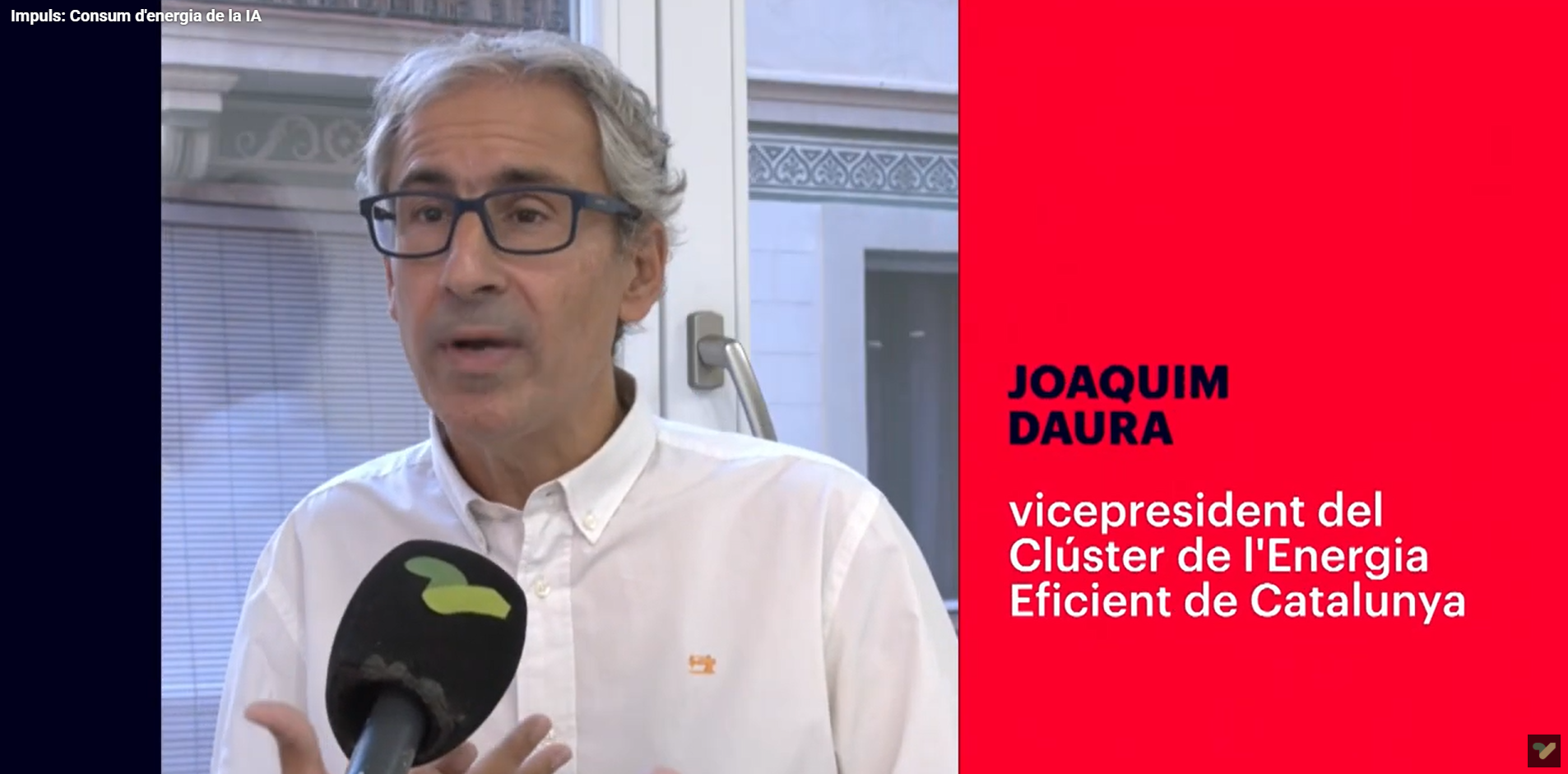
The report features the views of Joaquim Daura, Vice-President of Clúster de l’Energia Eficient de Catalunya (CEEC) and Head of Active Energy Management at Schneider Electric Spain, who focuses on some of the changes brought about by the rise of AI in these infrastructures.
One of the trends highlighted by the report is the distribution of electricity within data centres using direct current. At the same time, the increase in loads associated with artificial intelligence is changing the consumption profile of these facilities.
Until now, data centres have had a more constant energy consumption, but the rise of AI has introduced fluctuations, with considerable increases in demand at certain times. According to the report, the forecast for 2030 is that Spain will have around 6 GW of electrical capacity allocated to data centres.
Improving grid management
This growth also poses challenges for the capacity of the electricity grid. In this context, Joaquim Daura highlights the need to improve system management and promote greater self-generation capacity among new facilities:
“If I have a new industrial facility and I want to connect it to the electricity grid, I need an access permit, and if the grid is saturated, they cannot give me one. So what we have to do is be able to manage the electricity grid better. And what should also be done is to ask these companies to be able to generate part of their own electricity.”
The report also points to the potential growth of the data centre sector in Catalonia. The Catalan Government currently has almost thirty potential data centre projects under consideration, a development that will be closely linked to sustainability challenges and the need to power these infrastructures with renewable energy sources.



_20231114162600.png)

