
We are living at a pivotal moment. The climate emergency and the energy crisis are no longer abstract concepts—they have real impacts, particularly in Europe and especially in the Mediterranean. On top of this, there is a high dependency on oil and natural gas, making us vulnerable both economically and geopolitically.
Against this backdrop, there is broad consensus: the energy transition is inevitable. Electrification must be its cornerstone. However, not all sectors can be easily electrified. Certain high-temperature industrial processes, as well as long-distance maritime, aviation and land transport, require complementary alternatives.
This is where renewable hydrogen and its derived synthetic fuels come into play.
Why is hydrogen so relevant?
Hydrogen is already a key component of our economy, particularly in the chemical and petrochemical industries. The issue is that most hydrogen today is produced from natural gas, generating significant CO₂ emissions—so-called “grey” hydrogen.
Replacing this with renewable hydrogen would not only significantly reduce emissions but also enable a profound transformation of our industrial fabric.
What role can our country play?
A fair question: in this new energy landscape, what role can we play as a country?
The answer largely depends on the cost of producing renewable hydrogen. A key factor is the price of electricity, which accounts for 60–70% of the cost per kilogram.
This places us in a favourable position. The Iberian Peninsula benefits from strong solar and wind resources, land availability and population density, making it one of Europe’s most competitive regions for low-cost renewable electricity.
While importing hydrogen from cheaper regions is possible, it would recreate external dependencies that Europe is keen to avoid. The strategic choice is therefore clear: produce a significant share domestically.
Beyond energy: an industrial opportunity
Renewable hydrogen is not just an energy issue—it is an industrial one.
It involves new electrolyser manufacturing, components, engineering services, software, installation, operation and maintenance. It means skilled jobs, talent attraction, new training centres and capabilities—in short, a low-emission reindustrialisation based on technology and expertise.
But where do we stand today?
We appear well positioned for what will be a strategic race for the remainder of the 21st century. But has the race truly started? And at what pace are we moving?
To use a metaphor:
We are in good physical shape (we can generate low-cost renewable electricity)
We have a backpack full of energy bars (around €3 billion in subsidies)
But our running shoes have not yet arrived (no dedicated hydrogen transport infrastructure)
Nor have the cheering crowds (industry is not yet ready or incentivised to pay a premium for renewable hydrogen)
So the questions are clear: when will the “running shoes” arrive? And when will demand pick up?
When will the missing pieces be in place?
On infrastructure, hydrogen corridors connecting production to demand centres are expected soon. Spain, Portugal, France and Germany are moving in coordination, with Germany already progressing.
On demand, we must wait for:
the transposition of the Renewable Energy Directive (RED III), expected by early 2027, introducing binding consumption targets
a gradual reduction in renewable hydrogen costs, driven by electrolyser maturity and stronger adoption of digitalisation and digital twins
Race plan
In recent years, small-scale pilot projects have been key in improving electrolyser performance and reducing uncertainty.
Major consumers—especially petrochemical companies—are now investing in on-site production facilities, expected within two to three years, benefiting from guaranteed internal demand.
Near-term projects reaching Final Investment Decision (FID) will mostly be localised—so-called Hydrogen Valleys.
Later on, with infrastructure in place, projects will scale beyond borders, supported by initiatives such as the planned Barcelona–Marseille hydrogen link.
At the same time, regulation will tighten, driving sustained demand growth and forcing industrial adaptation.
A realistic yet optimistic conclusion
Renewable hydrogen is not an immediate fix nor a technological miracle. The journey will be long and gradual. But the direction is clear.
If we accelerate infrastructure, regulation and demand, we can play a leading role in a defining transition of the 21st century.
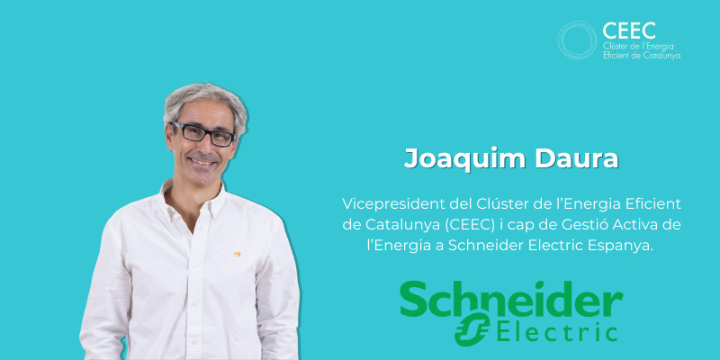
Joaquim Daura, Vice-President of the Clúster de l’Energia Eficient de Catalunya (CEEC) and Head of Active Energy Management at Schneider Electric Espanya.


_20231114162600.png)

